Parallel agents
Up to five agents work at once on Pro and twenty on Team, each on its own branch. One feature becomes several tasks that land together.

Factory Nexus plans the work, runs several AI agents in parallel on their own branches, reviews and tests what they build, and leaves what goes to main up to you.
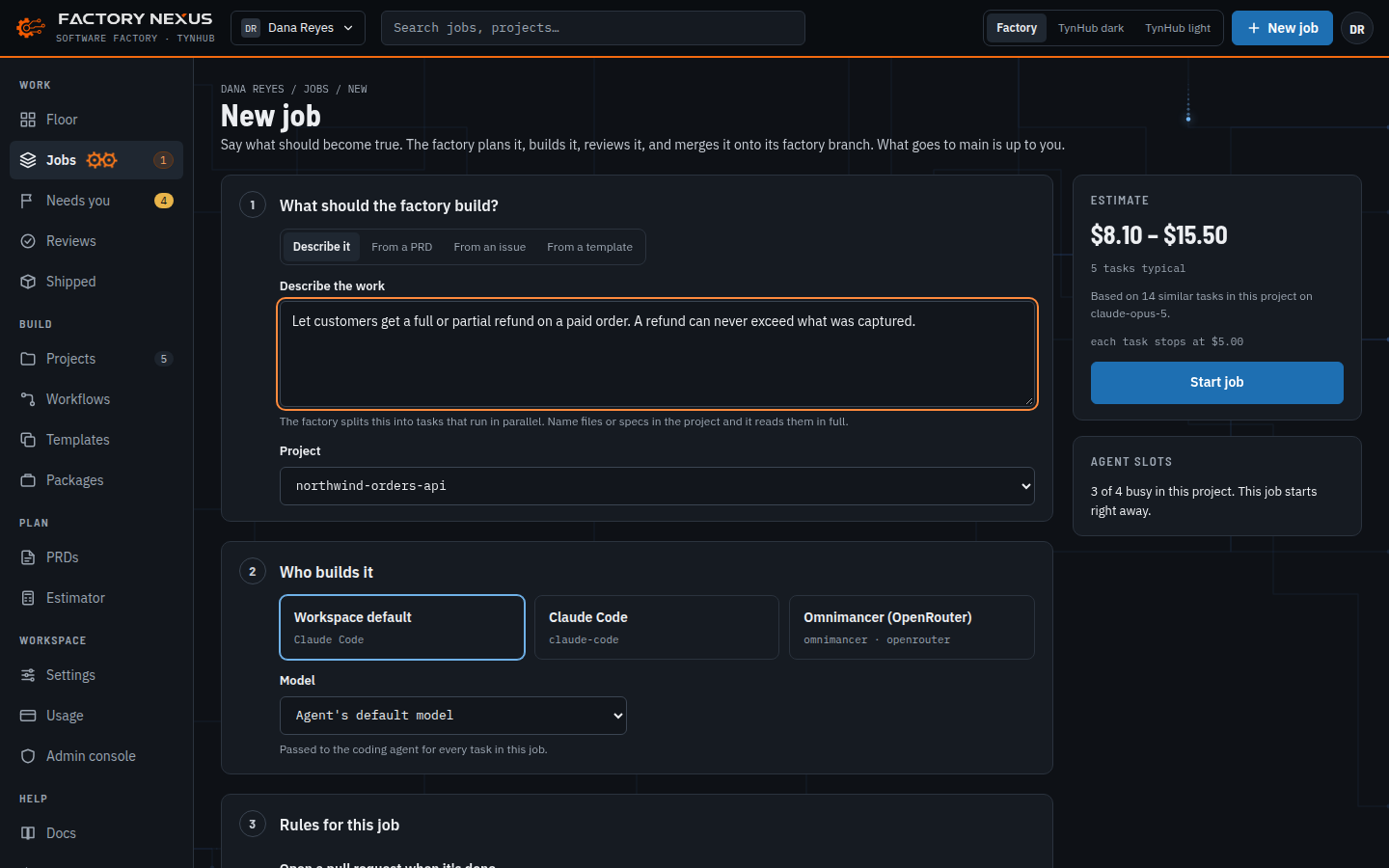
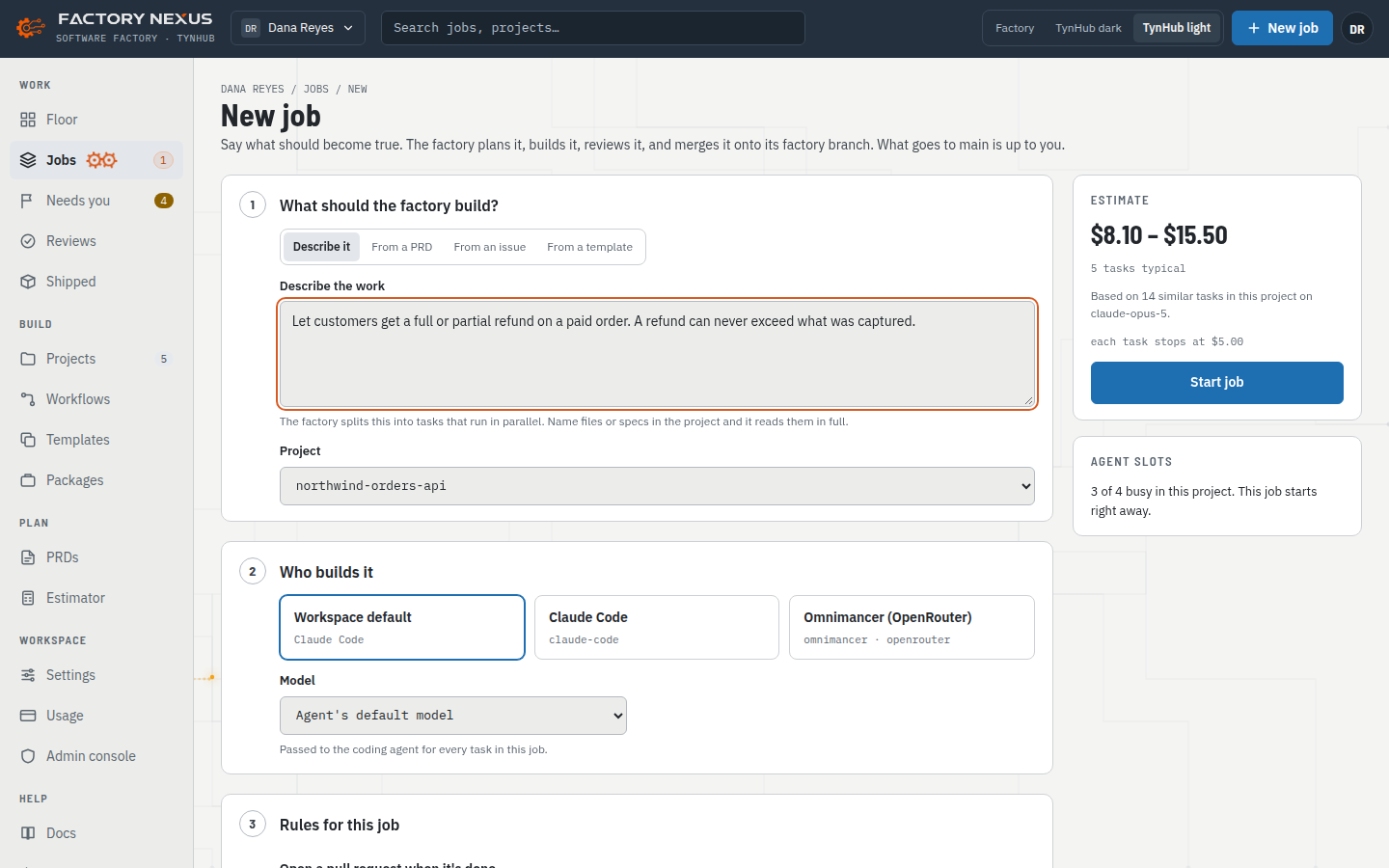
Say what should become true, in plain words or from a PRD or GitHub issue. Factory shows a cost estimate before anything runs.
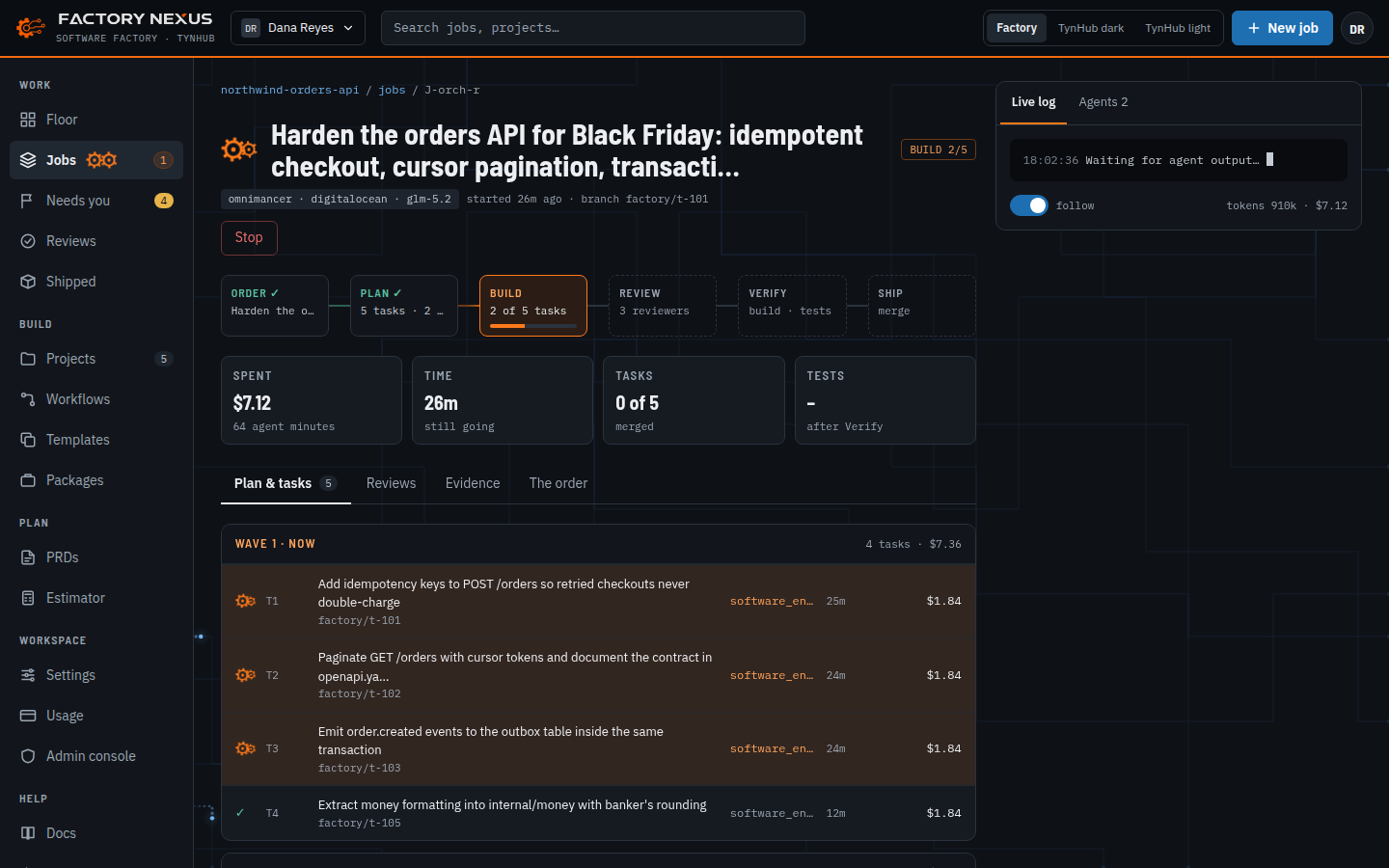
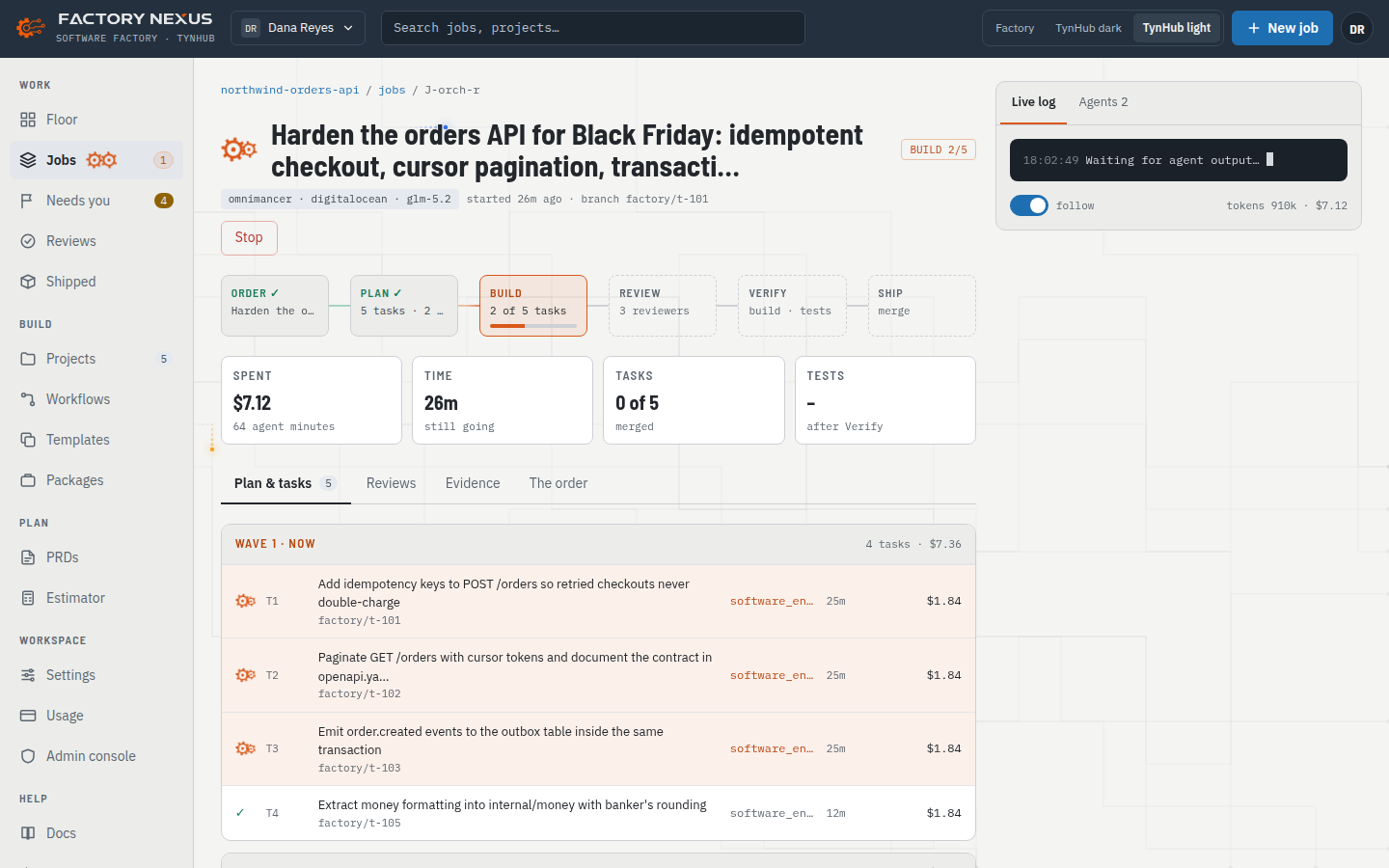
The work splits into tasks that run in waves, each agent on its own branch. Gears turn while an agent works, and the live log streams every file it writes and every test it runs.
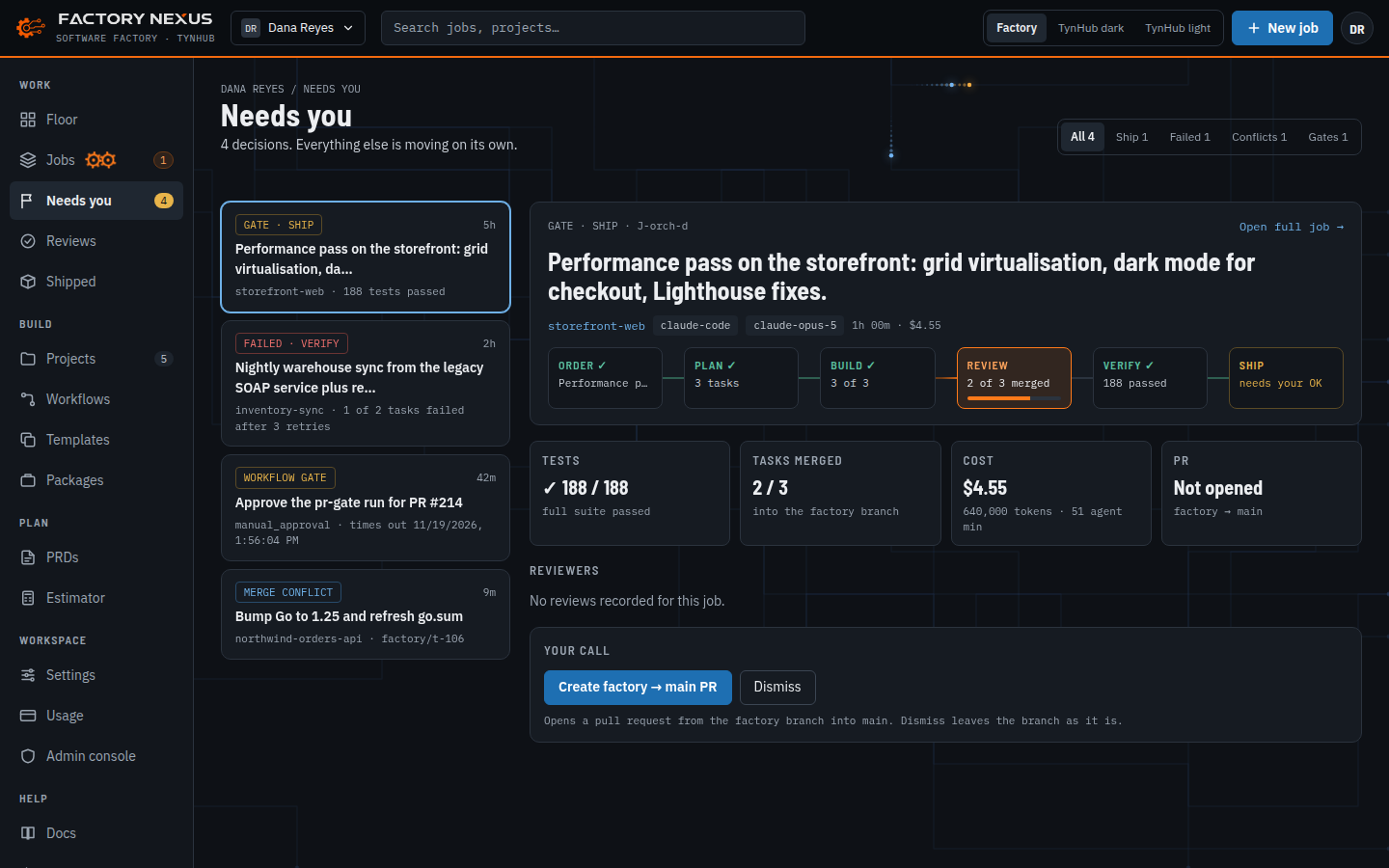
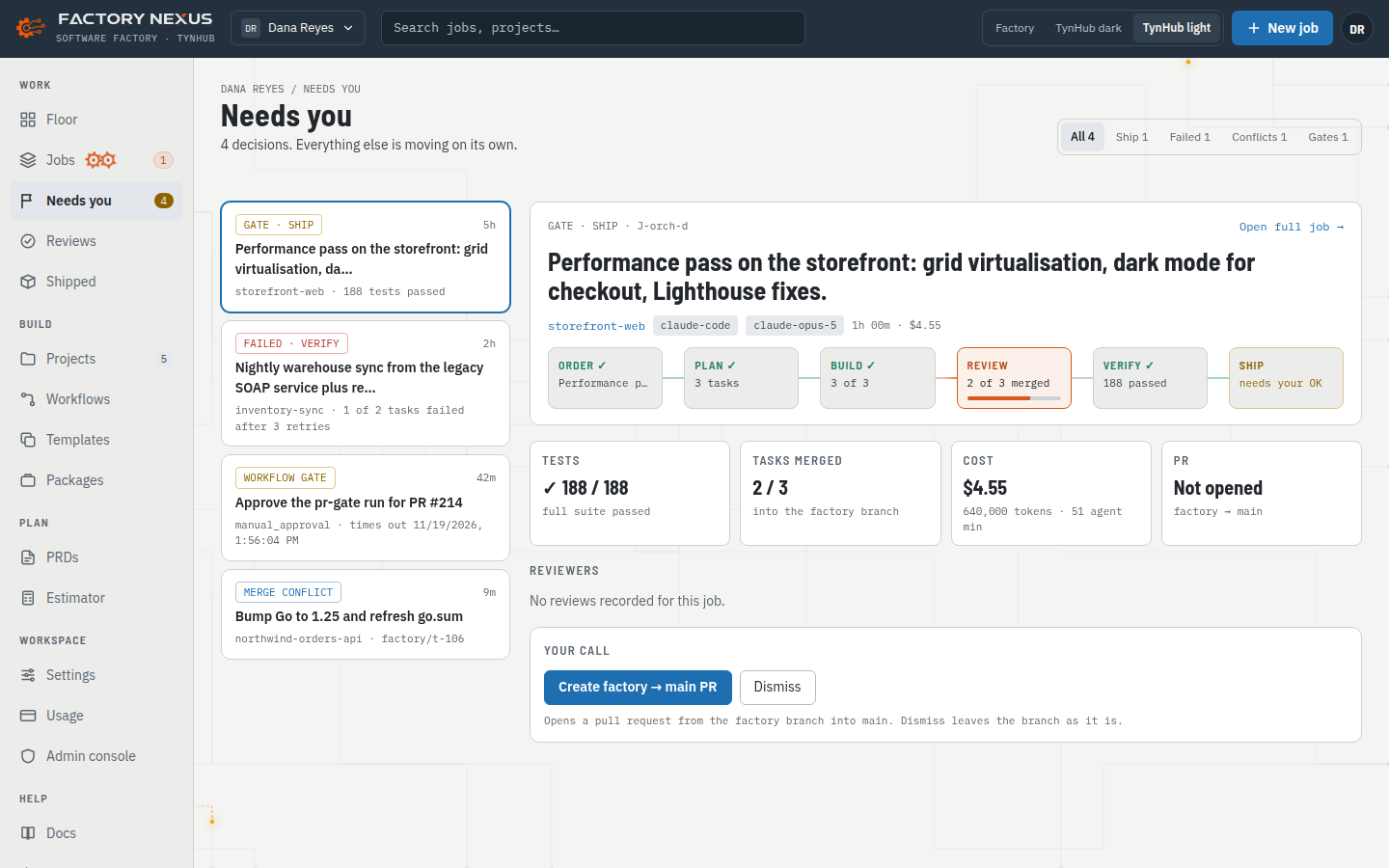
On paid plans, AI reviewers check every task and a failed review goes back to the agent with notes. When the job is done you see the evidence in one place, then open the pull request to main or dismiss it.
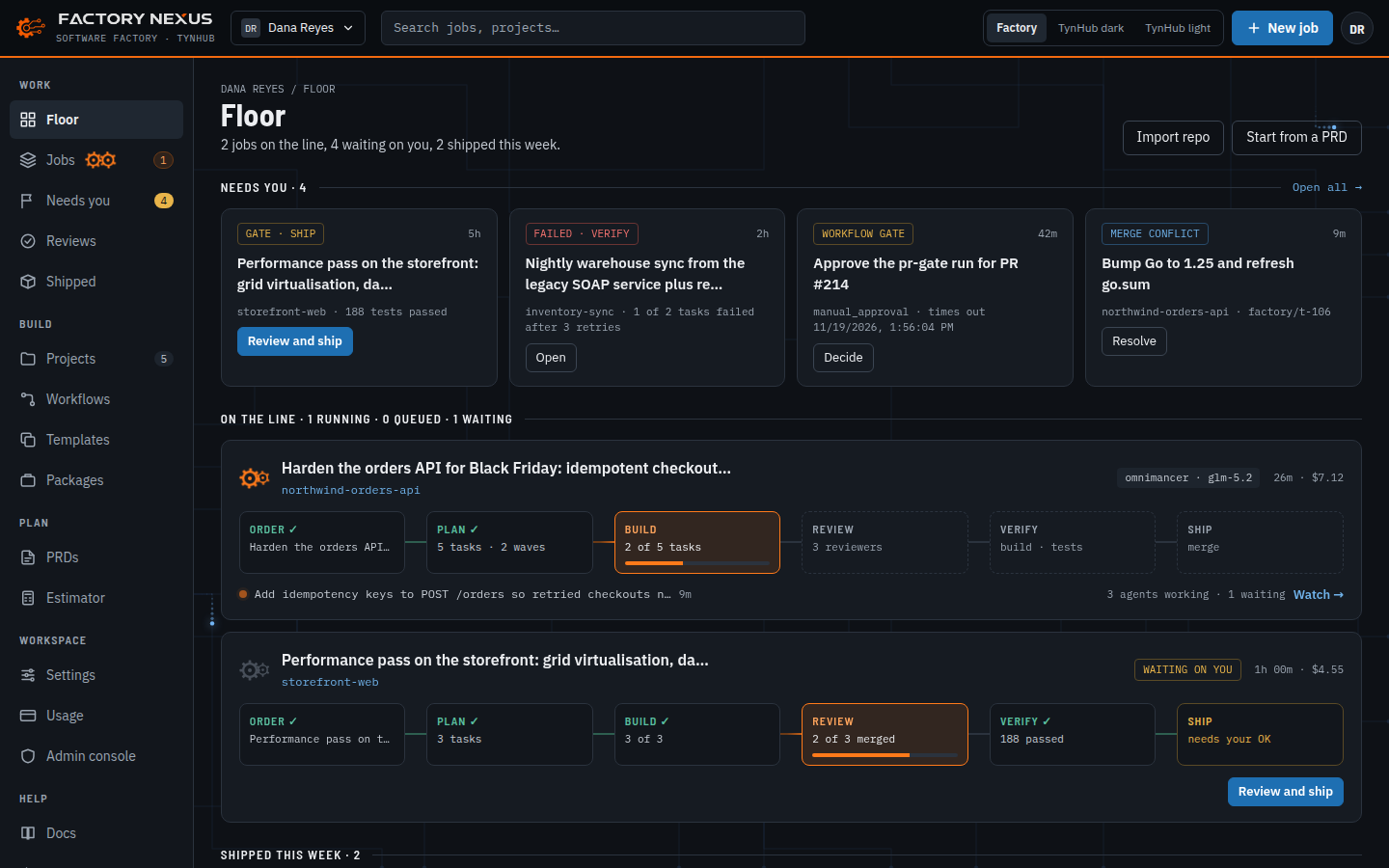
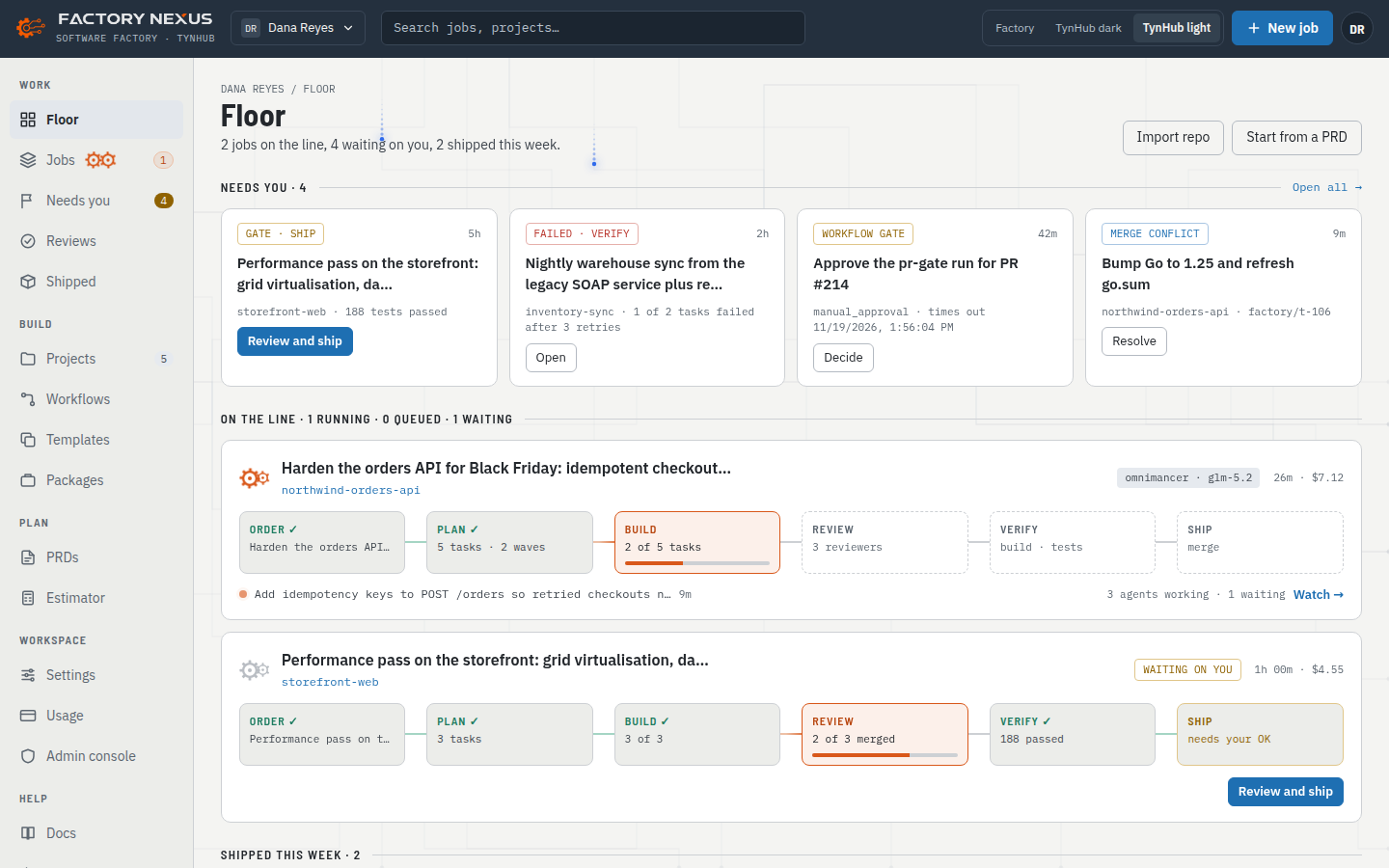
Every job in the workspace on one page: what needs you, what's on the line and at which stage, and what shipped this week, with the cost of each.
An AI assistant that edits one file at a time is a helper. A factory takes the whole feature: it plans it, splits it across agents, reviews and tests the work and brings you a pull request you can trust, or tells you exactly why it couldn't.
It plans before it builds. A feature becomes tasks in waves, with the files each one owns, so agents don't step on each other. Not sure how big an idea is? Get a free AI software project estimate first.
It checks its own work, but never approves it. Three reviewers look at architecture, security and style. Tests and a live preview run before the gate, and the gate is yours.
It works on your code. Import a GitHub repository in one click. Work comes back as a branch and a pull request, never a pile of pasted snippets.
It's part of TynHub. Sign in with your TynHub account, and soon, host what you build as a demo on TynHub.
Up to five agents work at once on Pro and twenty on Team, each on its own branch. One feature becomes several tasks that land together.
On Pro and Team, architecture, security and style reviewers check each task. A failed review goes back to the agent with the notes, up to three times.
Work lands on an integration branch, never straight on main. Workflow gates wait for your approval, and the pull request is yours to merge.
The free estimator gives a cost and time range for an idea before you build anything, no account needed.
Import from GitHub in one click. Work comes back as a branch and a pull request you can review like any other.
Run on Claude Code, or on Omnimancer with the model that fits the job, through OpenRouter or DigitalOcean.
Pipelines of build, test and agent steps with approval gates, started by a push, a merged pull request or a release.
Hand over a whole product requirements doc. Factory breaks it into waves and runs them in order.
factory-mcp lets Claude Code start jobs, read files and wait for results in Factory, all from your terminal.
Instead of one assistant editing your files one change at a time, Factory Nexus splits a feature into independent tasks and runs several AI coding agents at once — each on its own isolated git branch. The work happens concurrently, then gets reviewed and merged.
Yes. Import any GitHub repo in one click, or label an issue "factory" and agents pick it up automatically. You get reviewed code back as a pull request on your own repo.
Every agent works on its own git branch in an isolated workspace, and tasks are decomposed so agents own different files. Completed work is merged into an integration branch, and merge conflicts are surfaced for resolution rather than silently overwritten.
Three AI reviewers run concurrently on every task — architecture, security, and style. A failed review sends the agent back with the feedback attached. Only code that passes review reaches your integration branch.
Anthropic models, models routed through OpenRouter, and DigitalOcean inference, selected per task with automatic fallback. Paid plans unlock the higher model tiers. See the How We Use AI page for the full disclosure.
No. Describe a feature on the homepage and watch a build run without an account. Signing up is only needed to keep projects, connect GitHub, and run more agents in parallel.